
Mold, Water Leaks, or Dampness in California
Can I Sue My Landlord for Mold or Water Leaks in California?
Updated September 2026
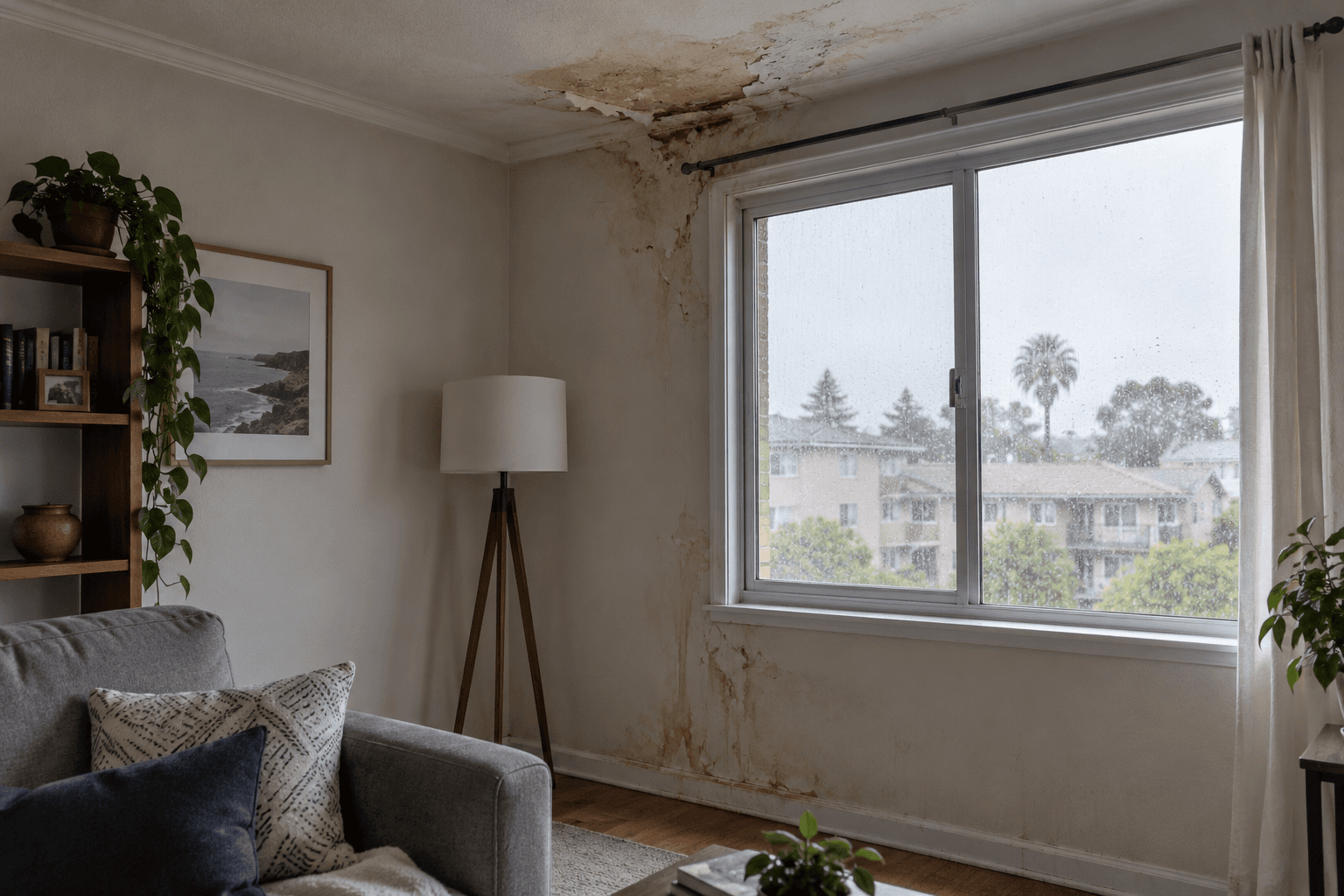
A fresh coat of paint can cover a water stain. It cannot fix the leak behind it.
Water entering a rental home through the ceiling, roof, windows, walls, or plumbing may begin as a maintenance issue. But when the water keeps returning, causes lasting dampness, damages the home, or leads to mold, it can become a much more serious problem.
California rental homes must have basic conditions needed for everyday living, including protection from the weather and working plumbing. In legal terms, this is often discussed as habitability. It does not mean that an apartment must be perfect. It means that the home must remain reasonably fit to live in.
When is a leak more than a minor problem?
A water problem may deserve closer attention when:
Rainwater repeatedly enters through a window, wall, ceiling, or roof;
A plumbing or roof leak continues after it was supposedly repaired;
Dampness, staining, peeling paint, or mold returns in the same place;
Drywall, ceilings, baseboards, or flooring become soft, swollen, warped, or damaged;
A room cannot be used normally;
Furniture, clothing, electronics, or other belongings are damaged; or
The landlord or property manager has been told about the problem, but the response is delayed, incomplete, or only cosmetic.
One small water stain or isolated mold spot does not automatically create a legal case. The concern becomes greater when the condition is serious, continues over time, or keeps returning despite complaints and attempted repairs.
Can a tenant take legal action?
Possibly. A tenant may have legal options when a serious water, dampness, or mold problem remains unresolved after the landlord has been notified and the condition causes meaningful harm.
Every situation is different. The history of the leak, how the landlord responded, whether repairs actually worked, and how the condition affected the tenant or the home can all matter. Mold alone also does not prove that it caused a particular health condition. Anyone experiencing health concerns should seek appropriate medical care.
What should a tenant do?
Good records can prevent a disagreement about what happened later. A tenant should consider:
Report the problem in writing. Identify where the water is entering, when it started, and whether it has happened before.
Take photographs and video. Document the condition before cleanup or repairs change it, when it is safe to do so.
Save communications. Keep emails, texts, maintenance requests, work orders, and the landlord’s responses.
Track whether the problem returns. Photograph the area again if staining, dampness, or mold reappears after a repair.
Keep records of losses. Save receipts and information concerning damaged belongings, temporary lodging, or medical care.
Consider requesting an inspection. If the condition is not addressed, the appropriate local housing or code-enforcement agency may be able to inspect the property.
Before taking matters into your own hands
Withholding rent, paying for major repairs, or moving out can have serious legal and financial consequences. A tenant should obtain advice based on the particular situation before taking any of those steps.
When the problem keeps coming back
The repair that matters is the one that stops the water from returning. If your landlord knew about serious or recurring leaks, dampness, or mold and the problem continued, Paradigma Law, APC can evaluate your situation and discuss your available options.
Request a Free Legal Evaluation
This article provides general information and is not legal advice.